Idea to App Store, in less than 1 month
A padel scoring app taken from idea to the App Store in under a month — designed and built end to end by directing AI agents.
- Role
- Solo, with AI agents
- When
- Jul — Aug 2026
- Where
- iOS · watchOS · Web
Challenge
Every padel scoring app assumes you will put the racket down. Then, mid-build, the database under the live app froze and took the product down with it.
Approach
One interaction — tap the team that won — on watch, phone and web, and a calm rebuild of everything underneath while the product stayed up.
Result
Live on the App Store in Greek and English, with the rebuild shipped as an ordinary update customers never had to notice.

What it is
The short version
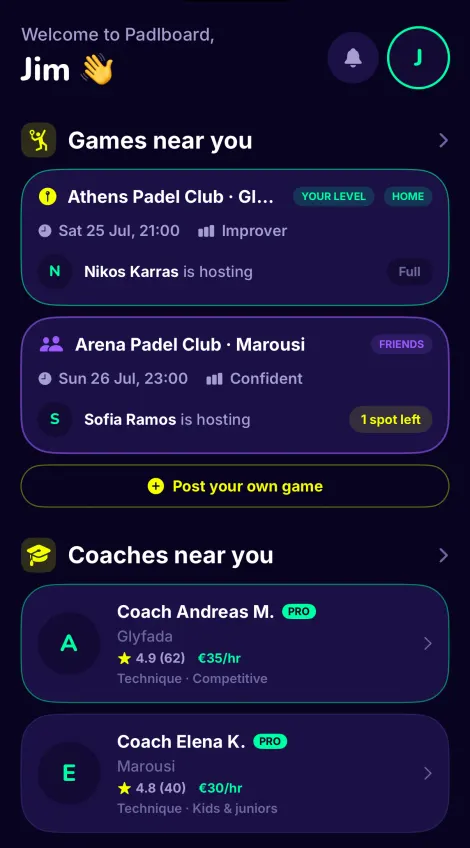
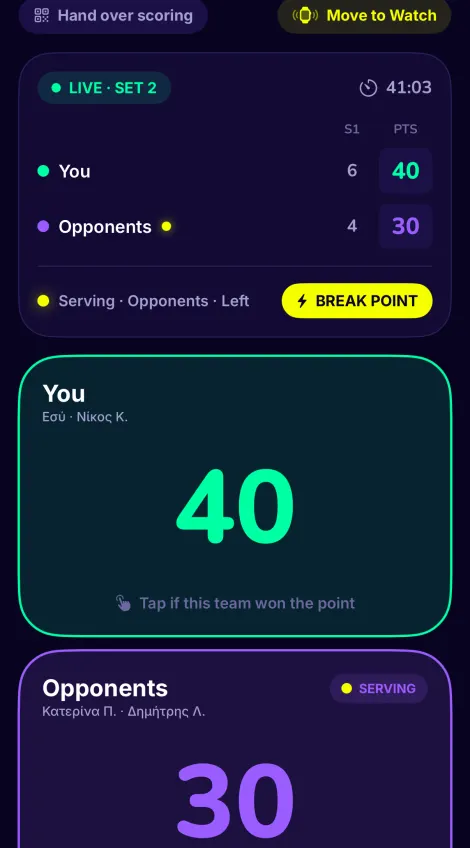
Padel is scored by people holding a racket. Every app I tried assumed you would stop playing, look at a phone and tell it who won. PadlBoard is one tap — games, sets, tiebreaks and history all follow from it.
It is three surfaces on one product: the watch on court, the phone for the match, the web for everything after. The hard part was not the app. It was replacing everything underneath it while people were using it.
Process
How it was built
- 01
Cut the work into steps that can be checked
Every piece went to an agent as something small enough to verify before the next one started. The discipline is not the prompting; it is refusing to move on until a step is proven.
- 02
Design the interaction, then the product
An eyes-free version tested worse than it read on paper and was dropped. Tap the team that won survived because it needs no instruction.
- 03
One product, three surfaces
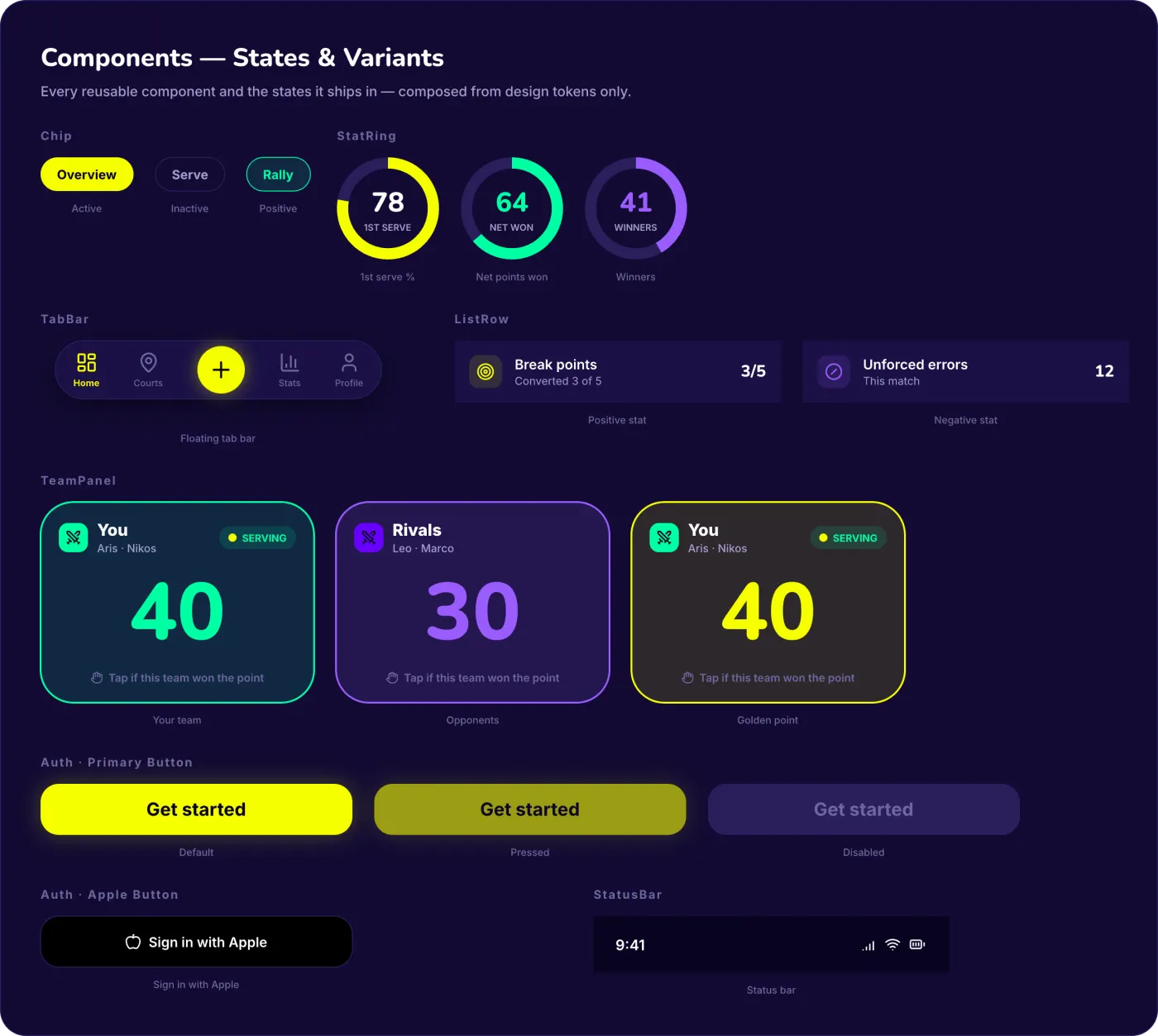
The watch, the phone and the web are views on the same match, not three apps kept in sync with each other.
- 04
Rebuild without taking the product down
Everything underneath was replaced in stages, and nothing switched over until the checks passed on a clean copy — which is why the change was invisible to the people using it.
Outcome
Where it landed
Live on the App Store in Greek and English. The rebuild went out as version 1.1 and was deliberately left out of the release notes, because it was never a customer feature.
Lesson
What it cost me to learn
Agents are not faster because they type faster. They are faster when the work is cut into steps that can each be proven finished — and slower than doing it by hand when it is not.